Text Structure (HOW K-6)
The HOW of text structure

Elementary: HOW we teach text structure
Over the past two newsletters, we have worked to build shared clarity around what Text Structure is and what it is not. In these final two issues, we shift from the “what” and “why” into the how: simple, high‑impact ways to weave text structure into everyday practice to support all learners.
This week, we begin with one of the most effective and accessible tools for K–6 classrooms: Anchor Charts.
Strategy: ANCHOR CHARTS!
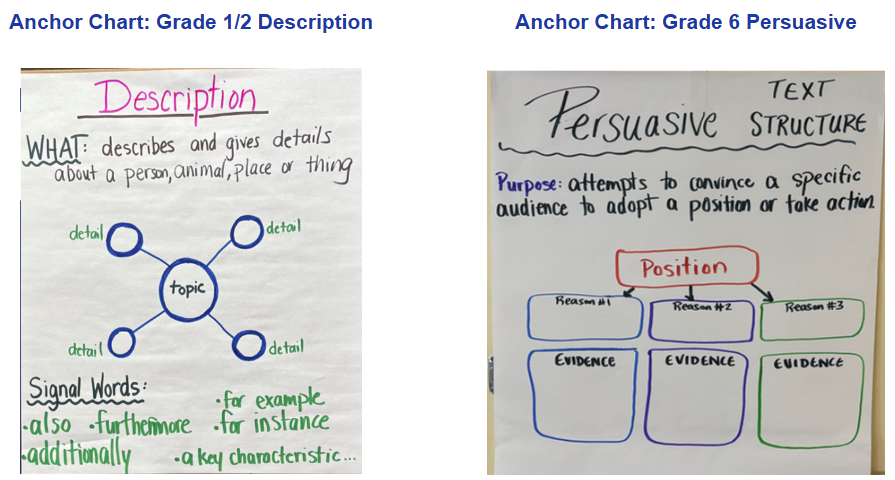
Anchor charts are those familiar chart‑paper posters that live on classroom walls. But, they can be far more than decoration. They act as anchors: steady, reliable reference points that hold students’ thinking in place. When built with students, they make the thinking pattern of a text structure visible, provide shared language for discussion, become a scaffold students return to again and again, all while supporting both reading and writing. Although this newsletter focuses on K–6, we use anchor charts all the way through high school.
Choose one focus text structure. (See last week’s newsletter for the list of six)
Tip: Stick with one structure at a time. Students need repetition and multiple practice opportunities to internalize the thinking pattern.
Add a title and a student‑friendly definition. Keep it short, clear, and accessible. Leave space for signal words (see step 4).
Co‑create a visual that represents the thinking pattern. This could be a shape, a sketch, a symbol, or a simple diagram. The goal is to help students see the structure, building that schema in the brain.
Add signal words as you encounter them in reading and writing. These Tier 2 academic vocabulary words help students organize and express their ideas.
Tip: AI can help you generate signal words that align with a specific structure. Don’t skip this step in the early years, and capture the vocabulary right on your anchor chart.Keep returning to the Anchor Chart, and keep adding to it. Anchor charts should be living documents.
Tip: If you want students to use the chart, build it with them. Co‑construction increases ownership and transfer.
Coming up next
In our final newsletter, we will explore Text Structure Skeletons as a powerful scaffold for secondary learners (and yes, elementary teachers will want to see this too). Drawing inspiration from Adrienne Gear’s influential work, we will show how Skeletons help students move the thinking pattern to the page with clarity and confidence. You won’t want to miss it!